

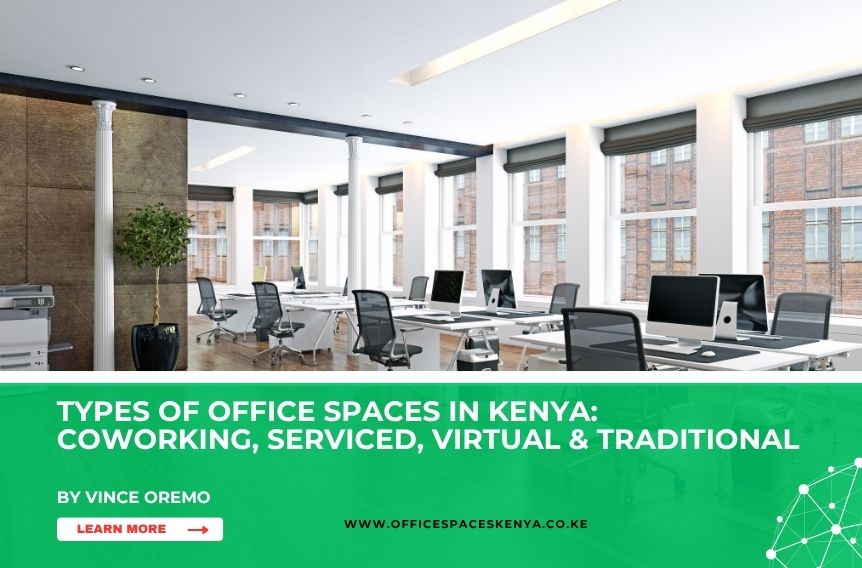
Types of Office Spaces in Kenya: Coworking, Serviced, Virtual & Traditional
The office landscape in Kenya has transformed dramatically over the last decade.
From the rapid rise of coworking hubs to the increasing demand for serviced and virtual offices, businesses today have more workspace options than ever before.
Whether you’re a freelancer, startup founder, SME owner, or corporate team lead, choosing the right office space is one of the biggest decisions that directly affects productivity, flexibility, costs, and brand image.
In this comprehensive guide, we break down the four main types of office spaces in Kenya—coworking, serviced, virtual, and traditional offices—and explore their features, pricing, best-fit businesses, pros, cons, and comparisons to help you make the right decision.
Key Takeaways
- Kenya’s office market now offers diverse options from coworking to traditional spaces
- Flexible workspaces are growing rapidly due to remote work and startup culture
- Cost, flexibility, privacy, and team size are key factors in choosing office space
- Virtual offices provide credibility at the lowest cost for online businesses
- Traditional offices offer full control but require significant upfront investment
Table of Contents
Join Our Office Space Community
Connect with other professionals, get workspace tips, and stay updated on the latest office space opportunities in Kenya.
Join Our WhatsApp Channel1. Coworking Spaces in Kenya
Coworking spaces are shared, flexible work environments designed for individuals and teams who want a professional workspace without the cost and rigidity of traditional offices.
They’ve grown massively in Nairobi thanks to the digital economy, remote work, and startup culture.
Key Features of Coworking Spaces
Open-plan shared areas
Executive private offices
Fast, reliable internet
Meeting rooms
Printing and scanning services
Chill zones, coffee bars and lounges
Community events and professional networking
Flexible memberships (daily, weekly, monthly)
Typical Pricing in Kenya
| Workspace Type | Price Range (KSh) per Month |
|---|---|
| Hot Desk | 4,000 – 18,000 |
| Dedicated Desk | 12,000 – 35,000 |
| Private Office | 35,000 – 180,000+ |
Prices vary depending on the location (Westlands, Kilimani, Upper Hill, Nairobi CBD, Karen), amenities, and brand.
Who Coworking Is Best For
Freelancers
Remote workers
Startups
Creatives
Small teams
Digital nomads
Advantages
Flexible: No long leases
Affordable compared to traditional offices
Networking opportunities
Modern amenities and stable power
Ready-to-use space—just walk in and work
Disadvantages
Less privacy in open areas
Can get noisy during peak hours
Not ideal for companies needing full branding control
2. Serviced Offices in Kenya
Serviced offices are fully furnished, private office suites managed by a facility provider.
They give you your own office space but offer shared amenities like receptionists, meeting rooms, mail handling, and IT support.
These are a popular upgrade for businesses that want professionalism, privacy, and convenience.
Key Features
Fully furnished private offices
Professional reception and mail handling
Administrative support
Meeting rooms and boardrooms
Secure internet and backup power
Kitchen and lounge areas
Cleaning and maintenance
Flexible contracts (1–12 months)
Typical Pricing
| Office Type | Price per Month (KSh) |
|---|---|
| 1–3 Person Office | 40,000 – 120,000 |
| 4–10 Person Office | 80,000 – 250,000 |
| Custom Enterprise Suites | 200,000 – 600,000+ |
Best For
SMEs
Branch offices of multinational companies
Professional firms (law, finance, consulting)
Teams that need privacy with flexible leasing
Companies expanding fast
Advantages
Zero setup costs
Professional environment
Move-in ready
Flexible rental terms
Suitable for confidential work
You only pay for the space you use
Disadvantages
More expensive than coworking
Limited ability to customize branding
Providers may charge for extras (parking, extra meeting time, etc.)
3. Virtual Offices in Kenya
Virtual offices offer businesses a professional address, mail handling, and reception services—without a physical office.
It’s the cheapest way to establish a credible presence in Kenya.
Key Features
Official business address (e.g., Westlands, Upper Hill, CBD)
Mail and package handling
Call answering or forwarding
Business registration support
Access to boardrooms when needed
Optional coworking days
Typical Pricing
| Service | Cost per Month (KSh) |
|---|---|
| Basic Address Package | 1,500 – 3,000 |
| Address + Mail Handling | 2,500 – 6,000 |
| Full Virtual Office | 5,000 – 15,000 |
Best For
Online businesses
New startups
Consultants
Small agencies
Companies expanding into Kenya
Businesses wanting to appear “bigger”
Advantages
Very affordable
Gives credibility
Helps with business registration
No overhead costs
Flexible and scalable
Disadvantages
No dedicated physical workspace
May need to pay extra for meeting rooms
Not ideal for full-time teams
4. Traditional Offices in Kenya
Traditional offices are long-term leased or owned office spaces.
These require full setup—furniture, branding, electricity, internet, renovations—but give businesses the highest level of customization and control.
Key Features
Full ownership or long-term lease
Total branding and customization
Private, secure workspace
Ability to design layout (cubicles, open plan, etc.)
Suitable for large teams
Typical Pricing
| Area | Average Rent per Sq. Ft (KSh) per Month |
|---|---|
| Westlands | 100 – 180 |
| Upper Hill | 110 – 200 |
| Kilimani | 90 – 150 |
| Nairobi CBD | 60 – 120 |
| Karen | 120 – 200 |
| Riverside | 140 – 220 |
A 1,000 sq. ft office could cost between KSh 80,000 – 220,000 per month, excluding setup and utilities.
Best For
Established companies
Government organizations
Agencies with large teams
Companies that need control over space
Firms requiring high privacy
Advantages
Full control over branding and layout
Long-term stability
Best for large teams
Good for confidential operations
Disadvantages
High upfront cost (furniture, wiring, internet setup)
Long leases (3–6 years)
You pay for utilities, maintenance, and security
Less flexible
5. Side-by-Side Comparison Table
| Feature | Coworking | Serviced | Virtual | Traditional |
|---|---|---|---|---|
| Cost | Low–Medium | Medium–High | Very Low | High |
| Flexibility | Very High | High | Very High | Low |
| Privacy | Low–Medium | High | None | High |
| Setup Required | None | None | None | Full setup |
| Best For | Freelancers, startups | SMEs, corporates | Online businesses | Large established firms |
| Networking | Excellent | Moderate | Low | Low |
6. How to Choose the Right Office Space in Kenya
A. Consider Your Budget
If you’re starting small, coworking or virtual offices are ideal.
SMEs can opt for serviced spaces to reduce setup stress.
Large teams should consider traditional spaces.
B. Think About Flexibility
Need to scale fast? Avoid long leases—go for coworking or serviced offices.
C. Evaluate Your Team Size
More than 10 employees? A private serviced office or traditional office suits you better.
D. Privacy Level
Confidential work (legal, finance, medical consultancy) requires serviced or traditional offices.
E. Location
Choose based on:
Proximity to clients
Staff commute
Traffic
Security
Parking availability
Top locations: Westlands, Kilimani, Upper Hill, Nairobi CBD, Karen, Riverside, Lavington.
7. Trends Shaping Kenya’s Office Space Market
A. Hybrid Work Culture
More companies combine remote and physical work, increasing demand for flexible coworking spaces.
B. Technology-Driven Workspaces
High-speed internet, smart meeting rooms, and cloud collaboration tools are now standard.
C. Affordable Satellite Offices
Teams are spreading out to avoid long commutes—Coworking hubs in the suburbs are booming.
D. Growth of Remote Freelancers
Kenya has one of Africa’s largest freelance communities, fueling demand for flexible workspace.
E. ESG and Eco-Friendly Spaces
More businesses prefer buildings with green certification and energy-efficient designs.
Find Your Perfect Office Space
Browse our comprehensive listings of available office spaces across Kenya’s top business districts.
Browse Our Office ListingsConclusion
Kenya’s office landscape has evolved, offering businesses more choices than ever before.
Whether you’re a small startup needing affordability, an SME looking for professionalism, or a corporation requiring long-term stability, there’s a workspace option perfectly suited to your needs.
Coworking spaces are ideal for flexibility and community.
Serviced offices are perfect for privacy and convenience.
Virtual offices offer credibility at a low cost.
Traditional offices give full control for established companies.
Choosing the right one is simply about understanding your business goals, budget, and long-term vision.